
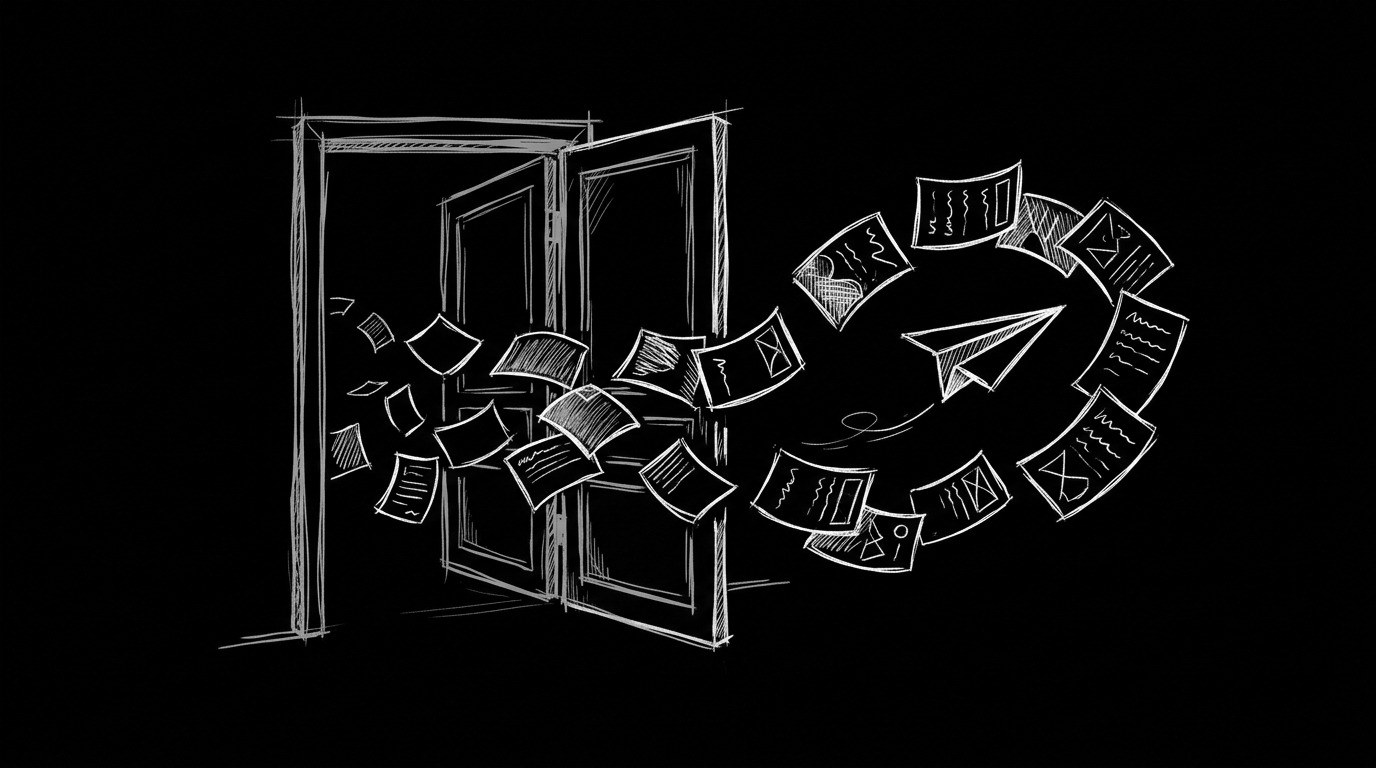
Here's an uncomfortable test for any journal app, including this one: imagine leaving it. What walks out with you? For too many apps the honest answer is a printout at best, a ransom note at worst. Ten years of your life shouldn't have an exit fee.
Retrography is built to pass its own test. One tap exports your complete archive — every entry, every day, photos included — as readable JSON in an open, documented structure. Not a proprietary blob: a file you could parse with twenty lines of code, feed to another app, or drop in a drawer for your kids. Restore it onto a new phone and the archive comes back whole.
For the human-readable version, there's paper. Retrography renders real vector PDFs — day sheets with the photos placed at the hour you took them, photo books for a trip, travel logs with the routes drawn in. Vector means the text is text: sharp at any size, searchable, printable at the shop on the corner. These aren't screenshots of an app; they're documents.
The deeper point is architectural. Your data lives on your phone and in your own iCloud — there is no Retrography account to close, no server-side archive to beg back. The exits exist because nothing is designed to trap you. Even imports are tracked in batches you can review, so the door swings both ways.
Keep a journal for a decade and the app will change — phones change, companies change, you change. The only archive that survives all of that is the one that was always yours. That's the whole philosophy: Retrography's job is to keep your days, not to keep you.